PVC will not rot, rust or corrode. It is engineered to take sun, rain and heat without giving up.
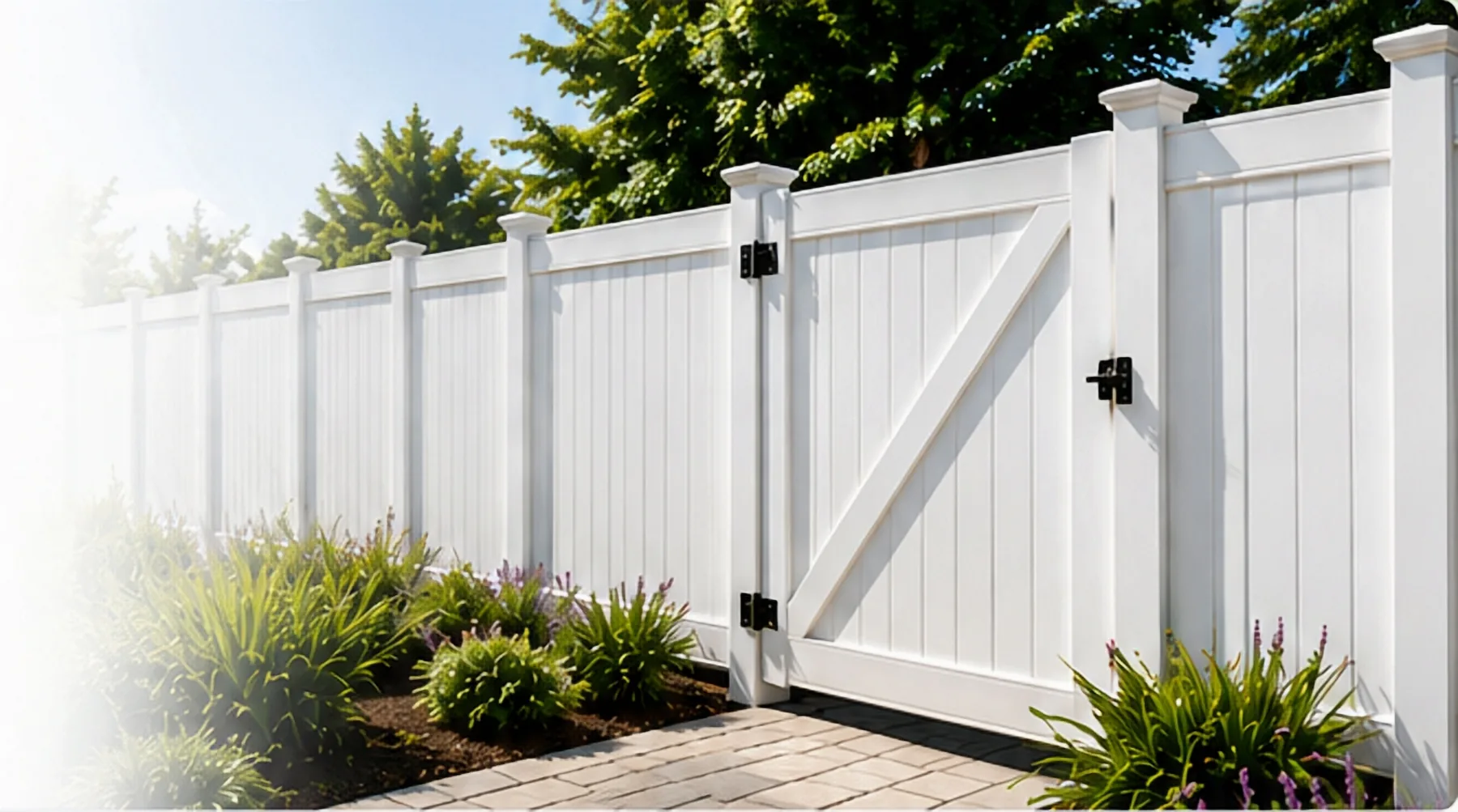
PVC Fence
Durable. Low
Maintenance.
Built to Last.
PVC fencing gives you strength, privacy and style in one material. It stands up to the elements without warping, rotting or fading, so you get a fence that still looks right years later with almost nothing asked of you.
Features & Benefits
Why homeowners choose PVC fencing
Built to Last
Low Maintenance
No painting, staining or sealing. An occasional rinse keeps it looking like the day it went in.
Privacy & Security
Solid panels give you a real screen, and a properly set fence keeps the property line clear.
UV Protected
Quality vinyl is UV stabilised, so it resists the fading and chalking that ruins cheap panels.
Eco-Friendly
Made from recyclable material and it never needs solvent-based stain or paint to keep looking good.
Stylish Options
Privacy, semi-private, picket and ranch rail, in more than one colour and texture.
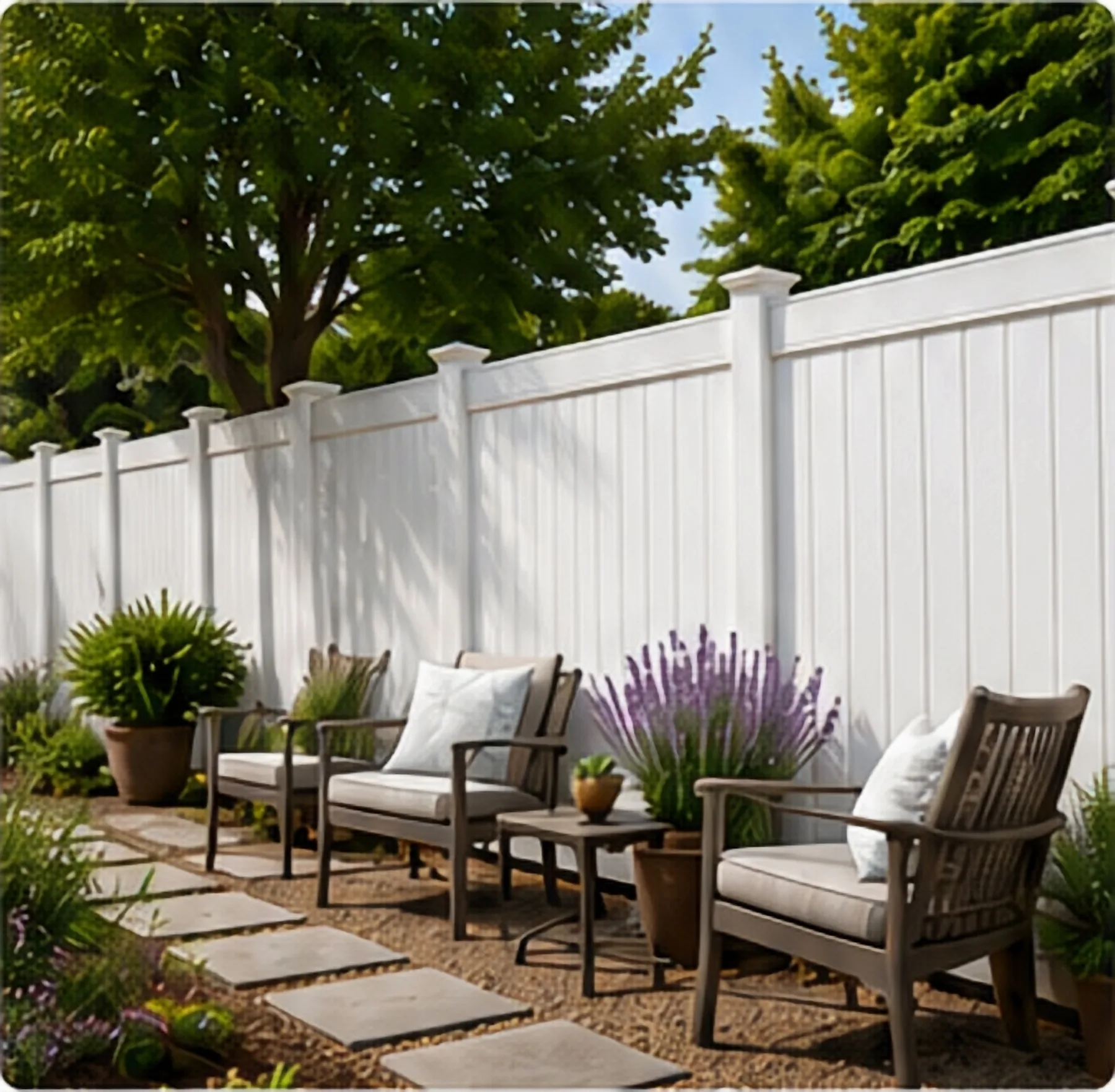
Styles to Match Your Home
PVC fence styles
 Privacy Fence
Tall solid panels for maximum privacy and noise reduction. The usual choice for a back yard.
 Picket Fence
Timeless and charming. Defines a front yard without walling it off from the street.
 Ranch Rail Fence
Two or three rails for open spaces, paddocks and long property boundaries.
Our Process
Professional installation,
every step of the way
1Free Consultation
We come out, measure, look at the ground conditions and talk through what suits the property.
2Custom Design
We lay out panel runs, gate positions and post spacing, then give you a written price with no hidden extras.
3Expert Installation
Posts set in concrete to the depth the panel height needs, panels set true, gates hung square.
4Final Walkthrough
We walk the whole run with you, check every gate latches, and clear the site properly.
5Enjoy Your Fence
Rinse it down twice a year and it will keep looking like this for a very long time.
Our Work
Gallery
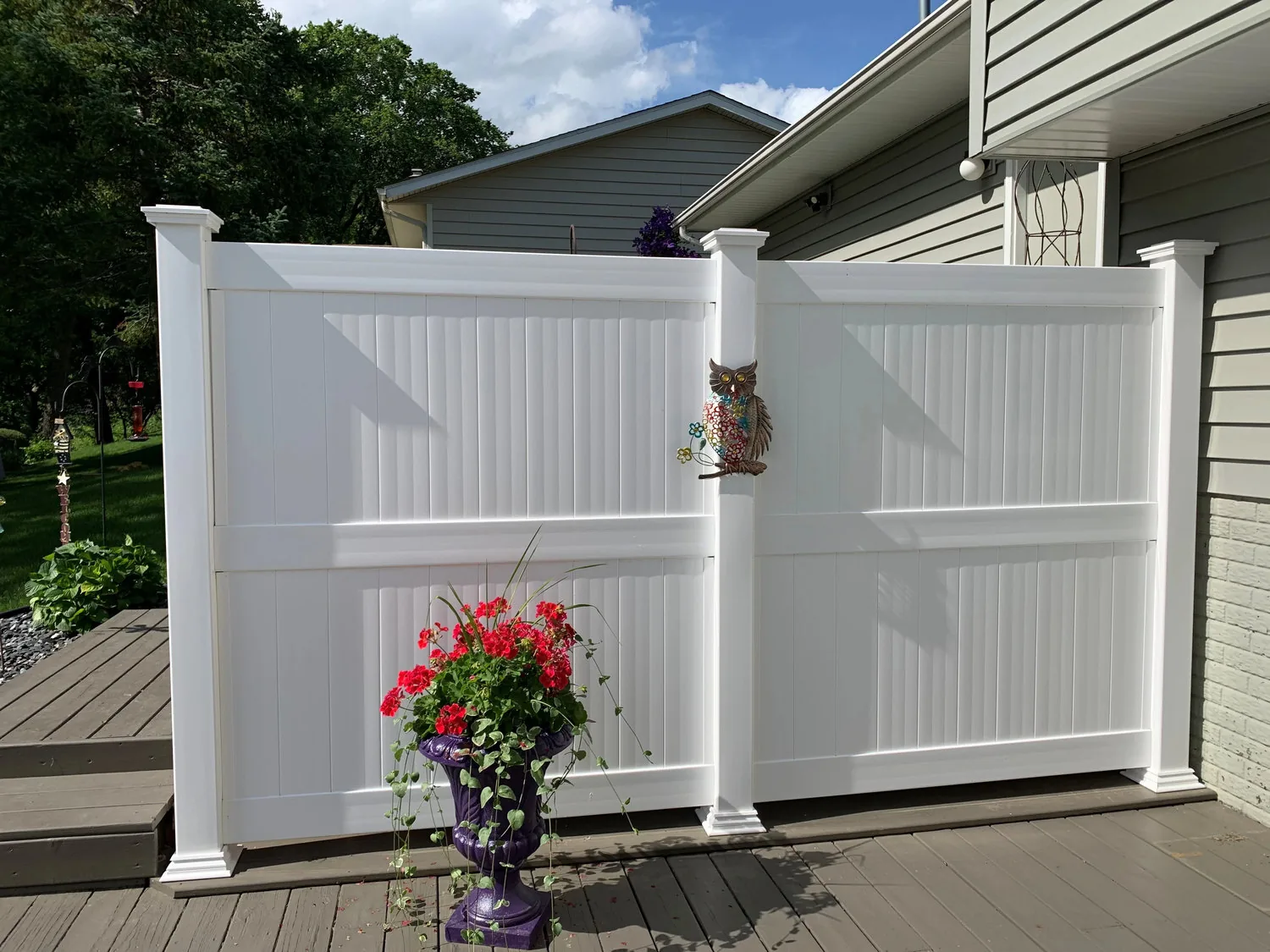
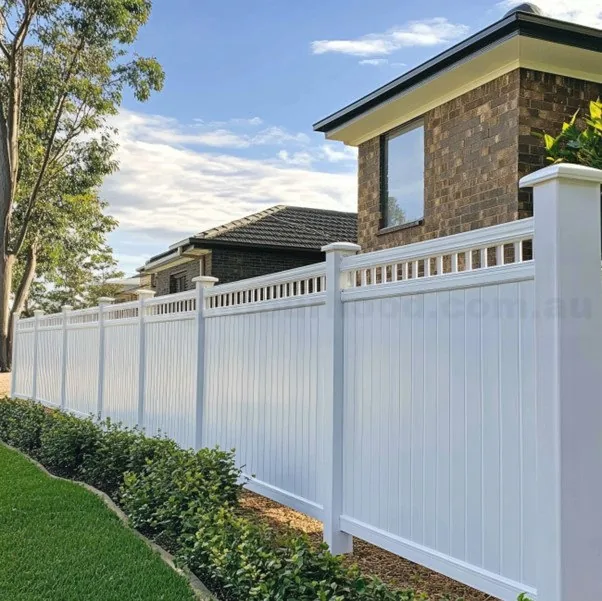
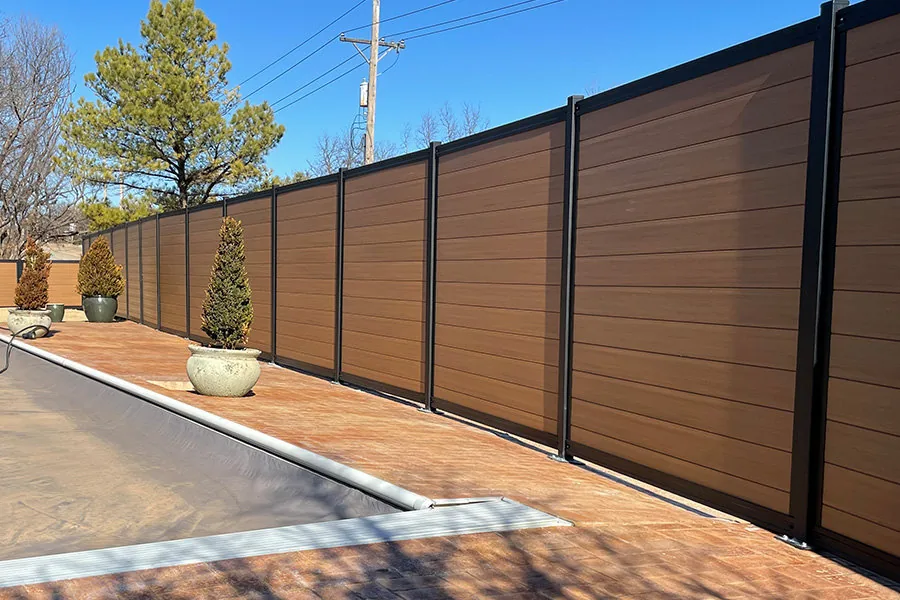
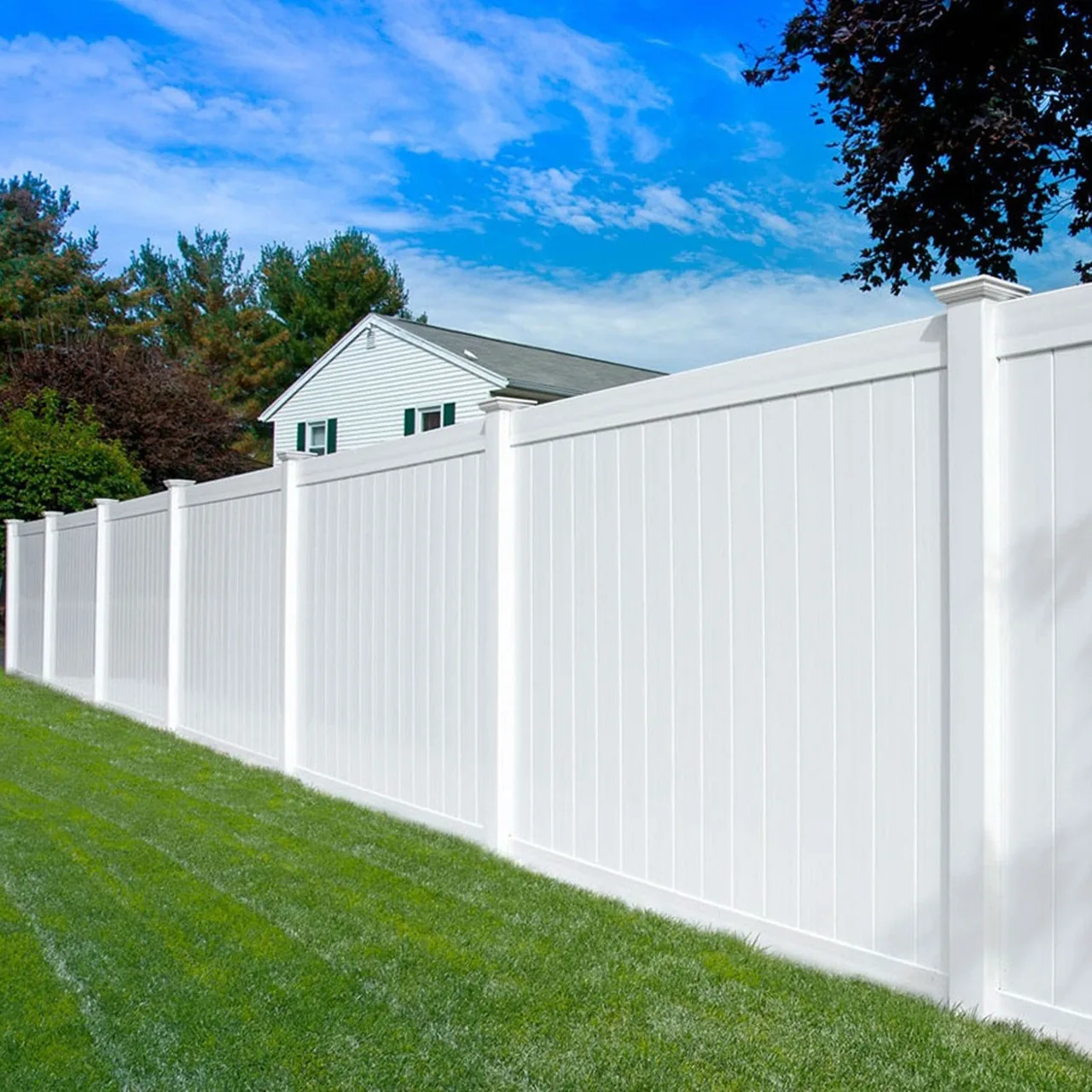
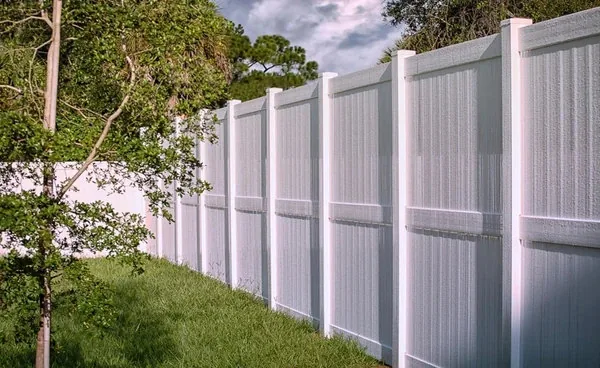
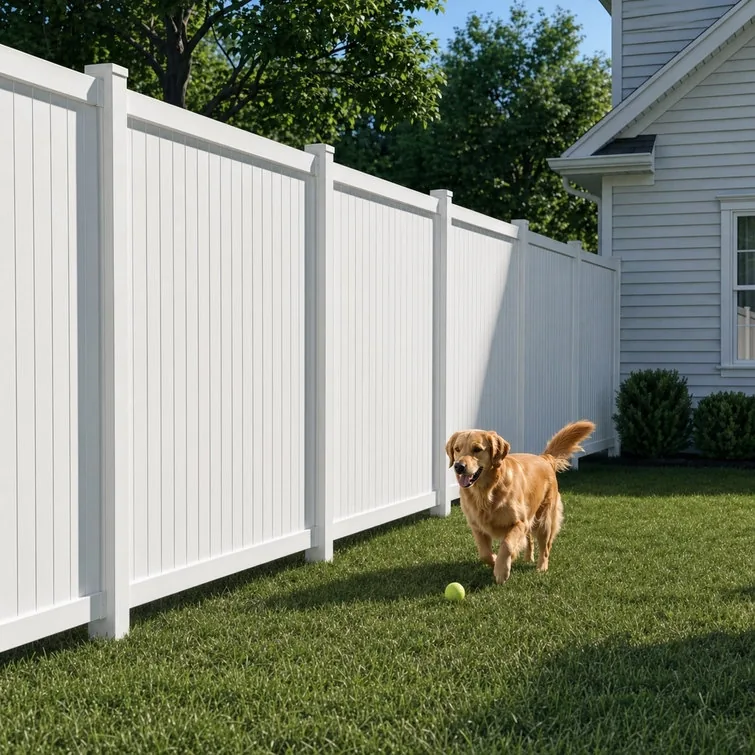
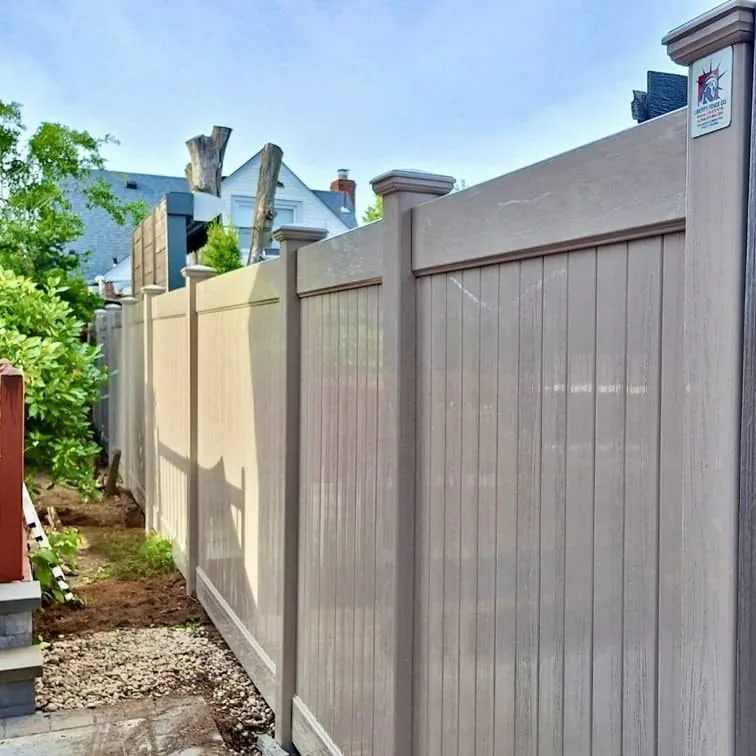
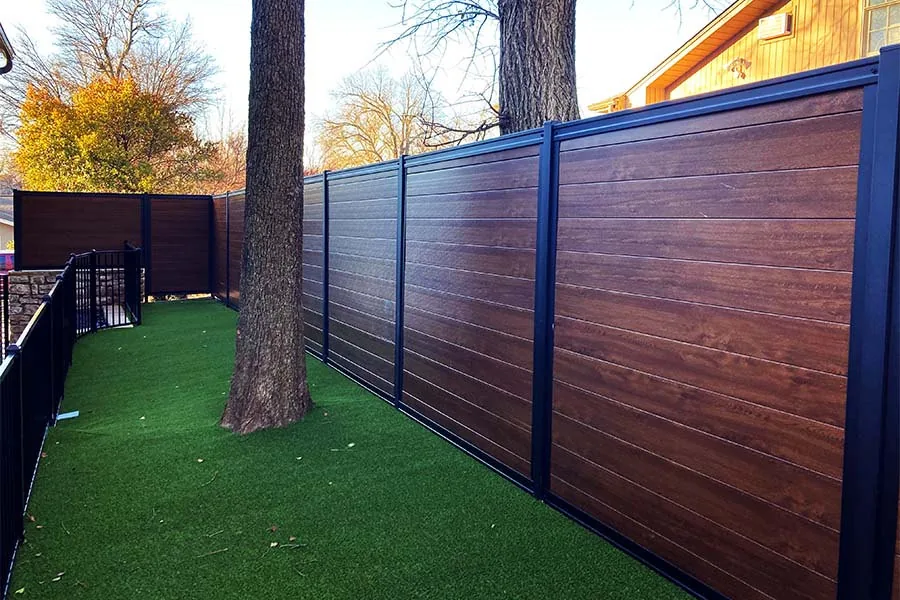
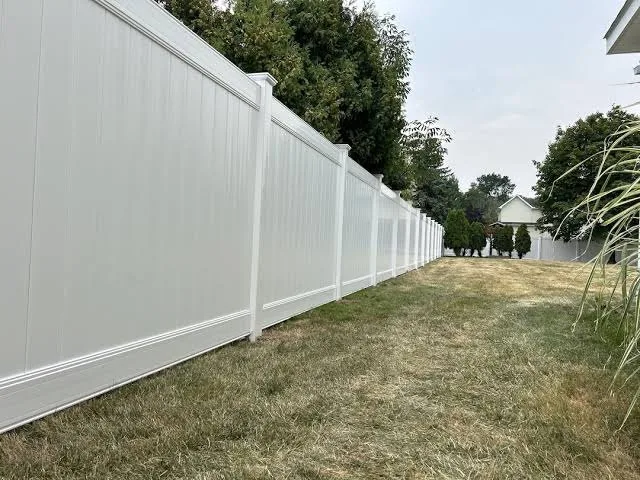
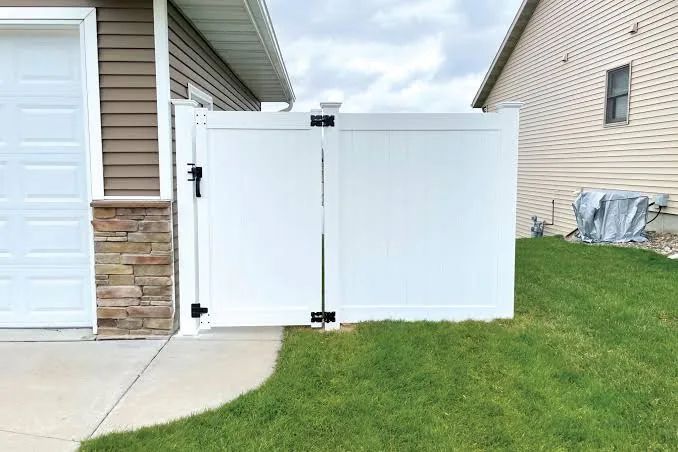
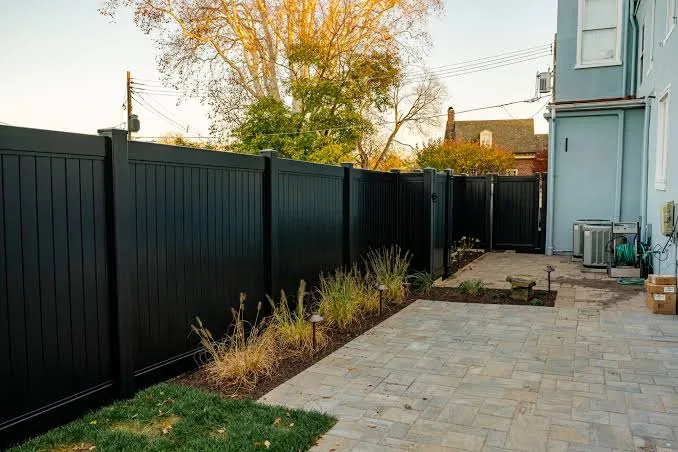
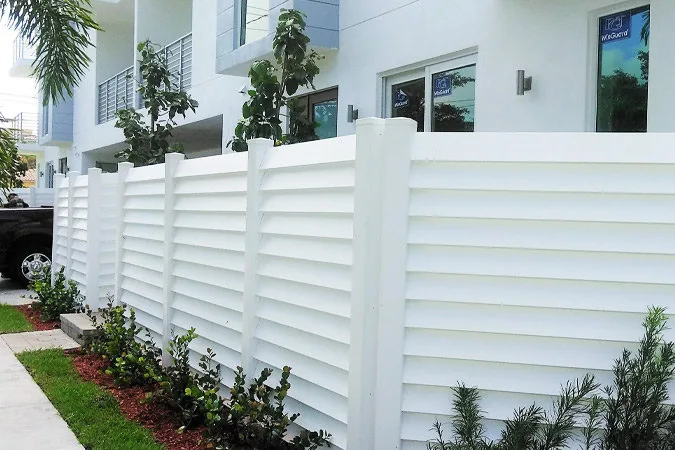
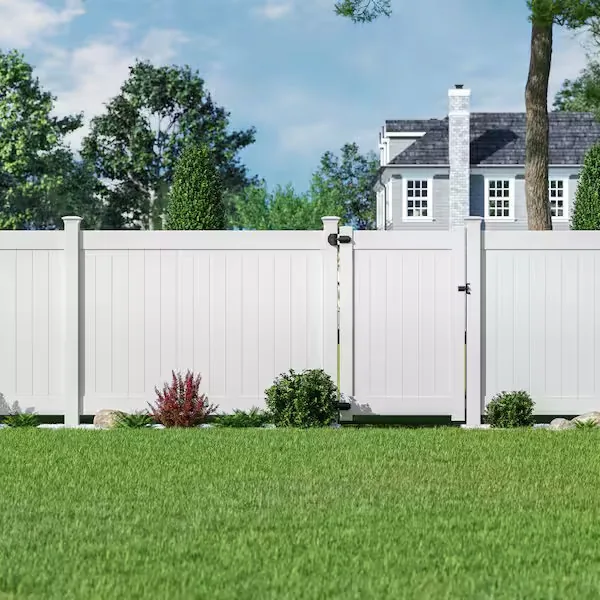
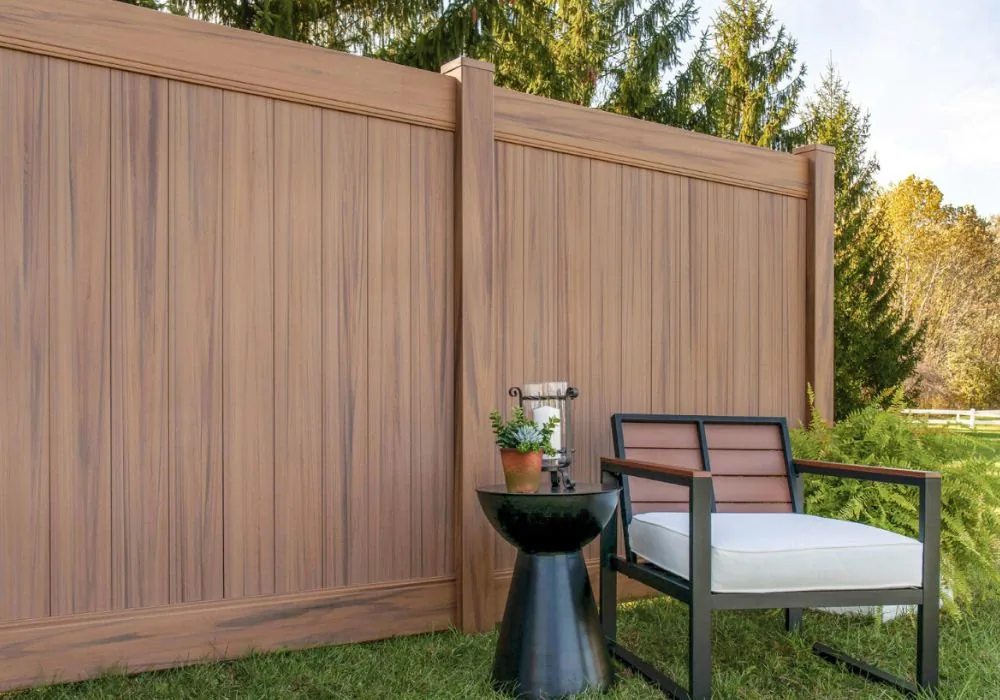
PVC fence installations we have completed. Click any photo to see it full size.
Los Angeles & PVC Fencing
How Los Angeles weather affects your fence
and why PVC is the smart choice
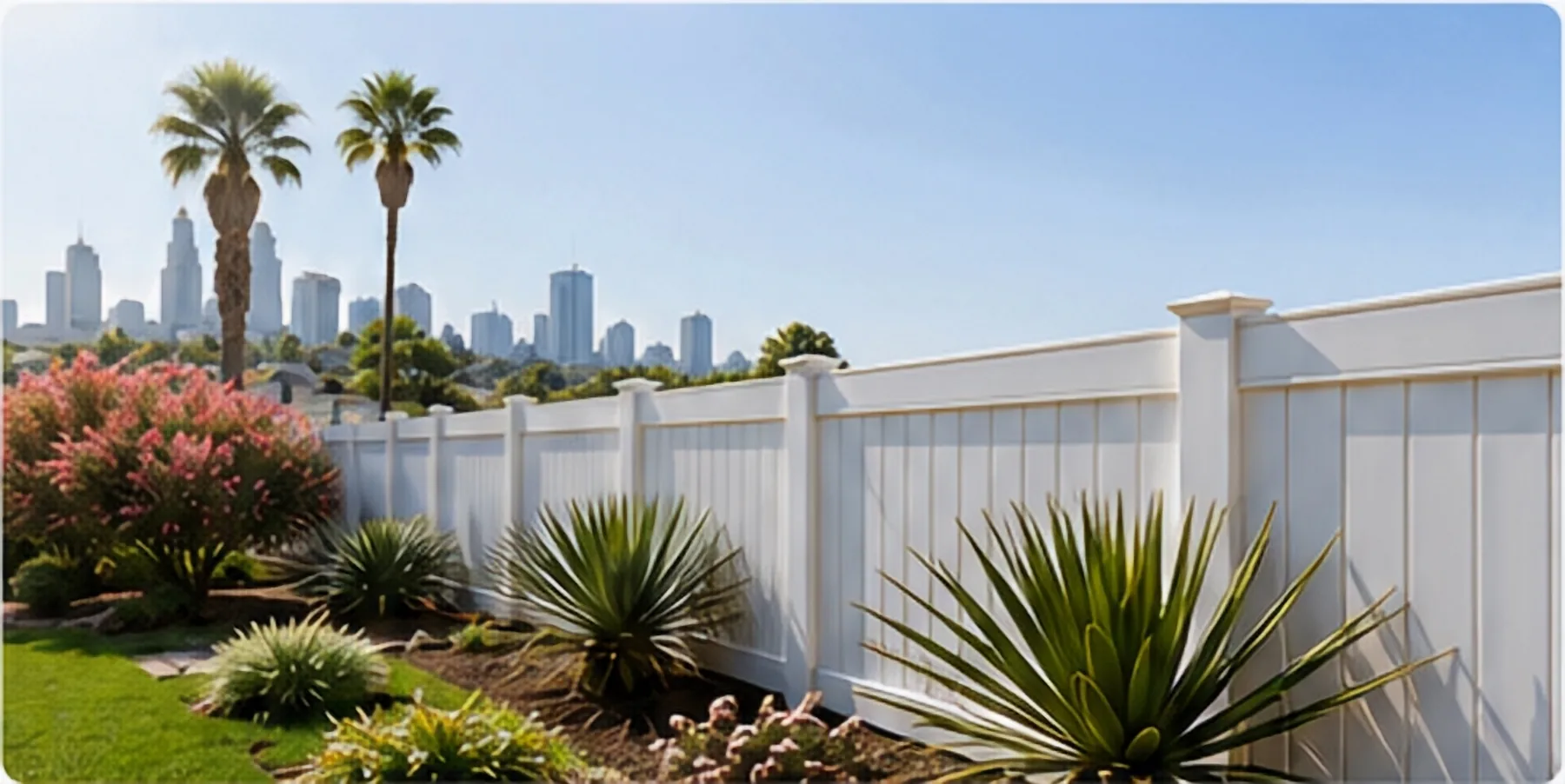
Living in Los Angeles means sunshine, ocean air and warm weather most of the year. It also means your fence is exposed to some of the harshest conditions a boundary can face.
Intense UV, salty coastal air and long dry spells all take a toll on wood and metal. Timber dries out and splits, metal corrodes at the base, and both need refinishing on a cycle most people never get round to.
PVC is built for this climate. It resists fading from the strong sun, will not warp or crack in the heat, and will not rust or corrode near the coast. It does not rot, splinter or interest termites, which makes it a long-term investment rather than a recurring job.
With minimal upkeep and real durability, vinyl is the sensible answer for Los Angeles homeowners who want a fence that looks good, performs better and stands up to the California lifestyle.
Los Angeles PVC Contractor
Your trusted Los Angeles PVC fence contractor
When it comes to installing quality PVC fencing, experience and craftsmanship matter. As a local Los Angeles contractor we understand what homes and businesses across the greater LA area actually need, and what the ground under them does through the year.
We give honest advice, use premium materials, and install properly on every project, large or small. From the first measurement through to the final clean-up we handle the whole thing, so you get a straightforward experience and a fence built to last.
We stand behind the work. Whatever the property, the aim is the same: a durable, low-maintenance fence that adds something to the place rather than becoming another job on your list.
PVC Fence Guide
Choosing and building a PVC fence in Los Angeles
What the material actually is, how to tell a good panel from a cheap one, what decides whether the fence is still straight in ten years, and what it should cost.
On this page
- What vinyl fencing actually is
- How to tell a good panel from a cheap one
- Posts and footings decide everything
- Gates are their own job
- What it costs, and what moves the number
- Vinyl against wood and metal, honestly
- The real maintenance list
- What we actually get called out to fix
- Choosing a PVC fence contractor
What vinyl fencing actually is
PVC fencing is extruded from a rigid vinyl compound, not moulded plastic. The quality of a panel comes down to what went into that compound and how much of it is in the wall of the profile.
Good vinyl is made from virgin material with a titanium dioxide UV package and impact modifiers built in. Cheap vinyl uses reground scrap, thins the walls to save resin, and skimps on the UV additive. Both look identical on the day they are installed. Three summers of Los Angeles sun tells you which one you bought.
The visible difference shows up as chalking, a dull white residue that rubs off on your hand, and as brittleness. A properly formulated panel flexes when a branch hits it. An under-modified one cracks.
How to tell a good panel from a cheap one
You do not need to be in the trade to check this. Four things separate a fence that lasts twenty-five years from one that looks tired in five.
- Wall thickness. Ask for the spec, not a description. A privacy panel rail should feel solid, not springy, when you press the middle of it.
- Rail inserts. Long bottom rails on a privacy fence need an aluminium or galvanised insert. Without one they bow under their own weight within a couple of seasons.
- Post size. A 6ft privacy fence wants a 5x5 post minimum. A 4x4 will do it, and it will also lean.
- The warranty wording. A lifetime warranty that excludes discolouration is a warranty against nothing. Read what it actually covers.
If a quote is dramatically cheaper than the others, the saving is almost always in the panel spec or the depth of the post holes. Both are invisible on handover day and both decide how the fence ages.
Posts and footings decide everything
More vinyl fences fail at the post than anywhere else, and almost none of those failures are the panel’s fault. Vinyl is light, which makes people casual about what holds it up. That is a mistake, because a light fence with a large surface area is a sail.
We set posts in concrete to a depth that suits the panel height and the ground, not to a standard number. A 6ft privacy run in loose fill needs more hole than the same run in stable soil. Gate posts get more again, because a gate concentrates all its load on two points.
Los Angeles soil moves. It bakes hard through summer and softens through the winter rains, and a footing that was adequate in September can be working loose by March. Getting the depth and the concrete volume right the first time is far cheaper than resetting a run later.
What goes wrong when it is rushed
- Posts set too shallow, so the whole run develops a lean after the first wet winter.
- Not enough concrete, or concrete poured against a dry hole so it never bonds.
- No gravel at the base, so water sits at the bottom of the post.
- Spacing stretched to save posts, leaving rails to span further than they are rated for.
Gates are their own job
A vinyl gate is where a cheap installation shows itself first. A gate leaf is unsupported on three sides and hangs off two hinges, so any weakness in the frame or the post is magnified at the latch edge.
Anything wider than about four feet needs a steel or aluminium reinforced frame inside the vinyl. Hinges have to be rated for the actual weight of the leaf, not the smallest ones that will physically fit. And the hinge post needs a deeper, wider footing than the line posts either side of it.
Done properly a vinyl gate latches cleanly for years. Done as an afterthought it starts dragging within a season, and by then the fix involves the post, not the hinges.
What it costs, and what moves the number
Vinyl costs more up front than wood and less than good ornamental metal. Where it wins is over time, because there is no staining cycle and no board replacement.
The things that actually move a quote:
- Linear footage and height. The single biggest factor. A 6ft privacy panel uses considerably more material than a 4ft one.
- Style. Full privacy costs more than picket or ranch rail for the same run.
- Removal and disposal. Taking out an old fence, especially one with concrete footings, is real labour.
- Ground conditions. Rock, tree roots, hillside slope and hard clay all change how long the holes take.
- Gates. Each one is a small project in itself, and driveway gates far more so.
- Access. If material has to be carried through a house or down a narrow side return, that costs.
We quote in writing after seeing the site. Anyone giving you a firm number over the phone without knowing your ground is guessing, and the guess is rarely in your favour.
Vinyl against wood and metal, honestly
Against wood
Wood is cheaper to install and easier to repair one board at a time. It also needs staining every few years in this climate, and in the ground it is on a clock. Vinyl costs more on day one and asks almost nothing afterwards. If you enjoy the look of stained cedar and you will actually maintain it, wood is a fine choice. If the fence is going somewhere awkward to reach, or it is a rental, vinyl is the better long-term decision.
Against metal
Ornamental iron and aluminium give you security and a longer sight line, but no privacy. If you want a solid screen, vinyl does it and metal does not. Where you want to define a boundary without closing off the view, metal wins. Plenty of properties end up with both — metal at the front, vinyl down the sides.
Against composite
Composite looks more like timber and costs more again. It is a good product, but for a plain white privacy run vinyl does the same job for less.
The real maintenance list
This is genuinely short, which is the point of the material.
- Rinse it down with a hose once or twice a year. A soft brush and mild soap for anything stubborn.
- Keep sprinklers off the panels. Hard water leaves mineral spotting that is a nuisance to remove.
- Trim vegetation back off the fence line so it is not holding damp against the panels.
- Check gate hinges and latches once a year and tighten anything that has worked loose.
- After a big wind event, walk the line and look for panels that have lifted out of a rail.
That is the whole routine. No sanding, no staining, no sealing, no rust treatment.
What we actually get called out to fix
- Leaning runs. Nearly always a footing problem, not a panel problem.
- Panels blown out of the rails. Common after Santa Ana winds, and usually a sign the panels were never properly seated.
- Bowed bottom rails. Missing rail inserts on a long privacy span.
- Cracked panels. Impact damage, or brittle low-grade vinyl that has lost its impact modifiers to UV.
- Dragging gates. Undersized hinge post, unreinforced leaf, or hinges rated below the gate weight.
- Discolouration. Cheap material without a proper UV package. This one cannot be repaired, only replaced.
The useful thing about vinyl is that most of these are section repairs. Individual panels, rails and posts can usually be replaced without touching the rest of the run.
Choosing a PVC fence contractor
Five questions worth asking anyone quoting your job:
- What is the panel and post spec, in writing? Not the brand name — the actual dimensions.
- How deep are the post holes, and how much concrete per hole?
- Are the bottom rails on privacy panels reinforced?
- Is the gate frame reinforced, and what are the hinges rated for?
- What exactly does the warranty cover, and who honours it — you or the manufacturer?
A contractor who answers those five clearly is telling you they have thought about the parts you cannot see. One who deflects to how quickly they can start is telling you something else.
We are locally owned and operated, and we work across Los Angeles County, the San Fernando Valley and Ventura County. If repair makes more sense than replacement on your fence, we will say so — that is a shorter conversation but a more useful one.
Ready to upgrade your property
with a PVC fence?
with a PVC fence?
Get a free estimate today and let us help you find the right fencing solution for your home.